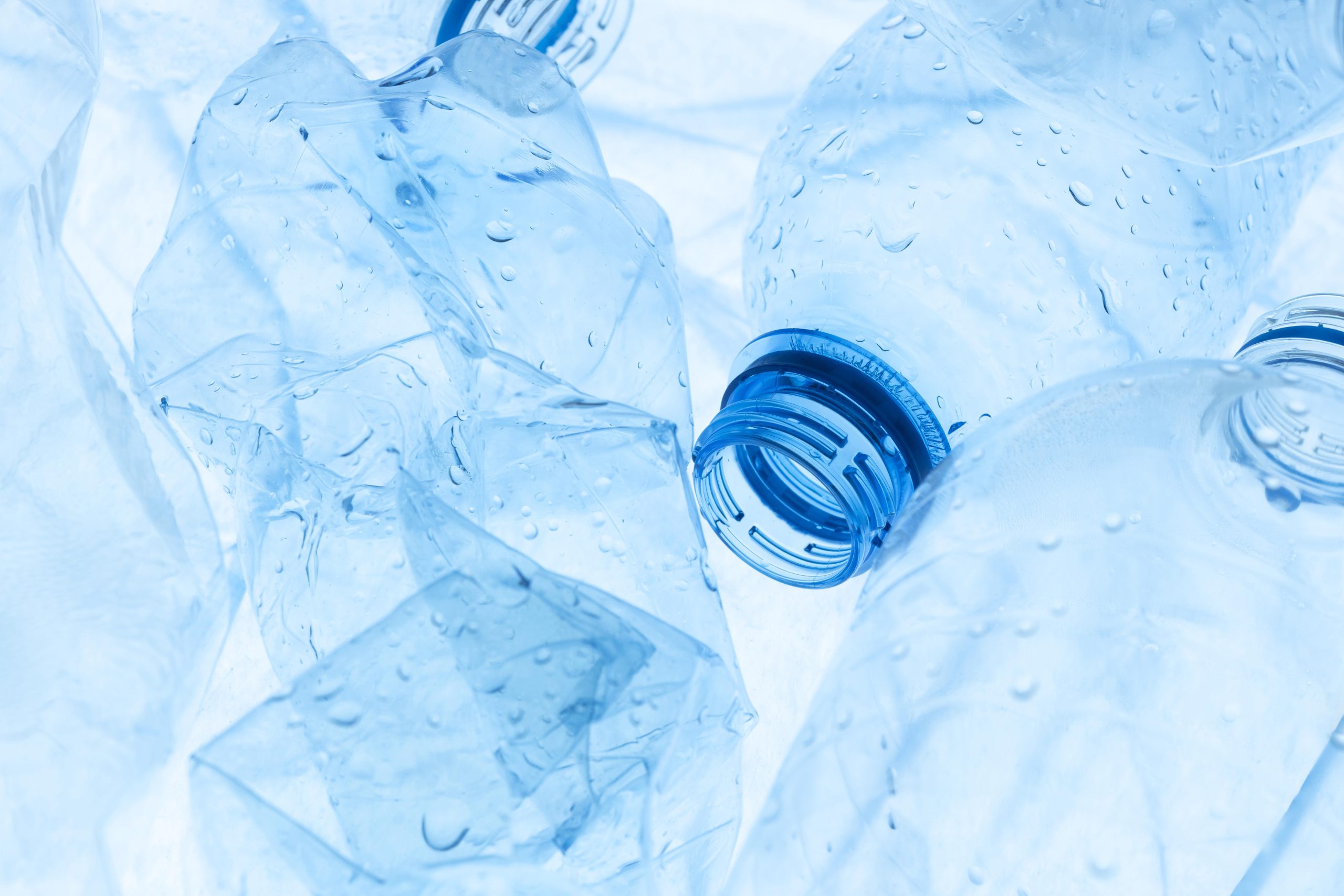
The European Union has entered a new era of recycling. According to the latest Eurostat data, in 2023 the EU generated 79.7 million tonnes of packaging waste, equivalent to 177.8 kg per inhabitant. Although this represents a slight decrease compared to 2022, the total volume of packaging waste remains significantly above the level the EU considers sustainable in the long term.
The average recycling rate for plastic packaging reached 42.1%, while the overall recycling rate for all packaging materials was 67.5%. The best performers were Belgium (59.5%), Latvia (59.2%), and Slovakia (54.1%).
New targets under PPWR, ESPR and WFD
The Packaging and Packaging Waste Regulation (PPWR) entered into force in February 2025 and will be fully applied from August 2026. Its aim is to harmonise recyclability rules and ensure a higher share of recycled content in new packaging. For PET beverage containers, the regulation sets a requirement of 30% recycled content by 2030 and 65% by 2040, with similar targets applying to other types of plastics.
These ambitious objectives cannot be met by mechanical recycling alone. Its potential ends with clean, single-material streams, while contaminated, coloured or degraded materials mostly end up being incinerated. This is where chemical recycling comes in — a process that breaks plastics down to their original monomers and returns them to production in a quality comparable to virgin raw materials.
Chemical recycling thus becomes a key tool not only for achieving PPWR targets, but also for meeting the objectives of the Ecodesign for Sustainable Products Regulation (ESPR) and the revised Waste Framework Directive (WFD).
According to scenarios by the Joint Research Centre (JRC) of the European Commission, chemical recycling could increase the EU’s overall recycling capacity for plastics by 15–20% by 2035 compared to the current level. Without its inclusion, it will not be possible to secure enough recycled content for packaging or textile products.
RECIVONE – a European zero-waste technology
RECIVONE has developed and patented a unique process of microwave-assisted alkaline hydrolysis that breaks down PET plastics and PES textiles back into monomers — terephthalic acid (TPA) and monoethylene glycol (MEG) — in virgin-grade purity.
Unlike energy-intensive methods such as pyrolysis or gasification, the entire process operates at much lower temperatures and with minimal energy consumption. This makes RECIVONE one of the cleanest and most efficient forms of chemical recycling.
The technology can process not only conventional PET and PES but also their biological variants — bioPET and bioPES — creating a truly circular ecosystem. The resulting monomers can be reused to produce new plastics and textiles, while the by-product is a special fertiliser (NaNO₃ or KNO₃ or NH₄NO₃) that serves as a nutrient source for biomass cultivation used in bioplastic production.
The process has already been technically validated at TRL 4 and is being prepared for scale-up to a pilot unit. Thanks to its low input costs and modular design, the technology is economically viable even for smaller regional operations. It is also highly cost-effective — with low energy requirements, zero waste, and valuable outputs with strong market potential.
The resulting polymers are recycled materials with quality equivalent to virgin feedstock, suitable for the production of new PET plastics and polyester textiles. At the same time, a high-quality fertiliser is produced, replacing conventionally manufactured nitrogen fertilisers and further improving the overall economic efficiency of the process.
This combination of low operating costs and high-value products makes RECIVONE’s technology one of the most economical and at the same time cleanest solutions in chemical recycling.
Summary of technology advantages
• Zero waste: all inputs are converted into valuable products (pure monomers + fertiliser).
• Low energy demand: thanks to microwave heating and uniform reaction, the process is fast and requires minimal energy.
• CO₂ savings: the technology combines two processes in one — PET/PES recycling and simultaneous fertiliser production. This eliminates the need for a separate fertiliser manufacturing process, significantly reducing the overall carbon footprint.
• High purity of outputs: monomers achieve quality suitable for food-grade applications.
• Wide range of inputs: capable of processing contaminated, coloured, degraded, mixed and textile fractions, including bioPET and bioPES.
• Dual economic value: revenue from monomers + revenue from the by-product (fertiliser).
A perfectly closed cycle
RECIVONE closes the material loop between plastics, textiles and agriculture.
It transforms waste into raw materials for new products; the chemical process generates fertiliser for biomass cultivation, and the biomass becomes bioplastics again — a pure cycle without residues or waste.
In this way, it replaces incineration and linear processing with a truly closed material cycle that reduces CO₂ emissions and strengthens Europe’s raw material self-sufficiency.
RECIVONE proves that technological innovation can go hand in hand with environmental benefit.
We transform plastic into a resource, waste into opportunity, and replace incineration with a circular, waste-free future.
By Lenka Linhartova, Co-founder of RECIVONE