-
 Read more: Fertilisers: A Strategic Resource for Europe
Europe’s food security does not begin in the field, but with access to fertilisers. In its new Action Plan, the European Commission highlights that European agriculture remains heavily dependent on imports of both raw materials and fertilisers themselves. The future resilience of Europe’s food system is therefore linked to domestic production, the circular economy, innovation, and more efficient use of resources. In May, the European Commission presented its Action Plan for Fertilisers, responding to growing geopolitical risks, a high dependence on imports, and the long-term need to strengthen the competitiveness of European agriculture and industry. At the same time, the document…
-
 Read more: Defining EoW for Chemical Recycling
The European debate on the circular economy is increasingly focusing on End-of-Waste (EoW) rules, namely the point at which a material, after processing, ceases to be waste and becomes a secondary raw material for further industrial use. The design of these rules will also be important for the further development of chemical recycling of plastics, new investments, and the functioning of the European market for secondary raw materials. Chemical recycling is now regarded as an important complement to mechanical recycling, particularly for materials that are difficult to process through conventional recycling methods. These include mixed plastics, multilayer packaging, coloured materials,…
-
 Read more: Europe’s Untapped Raw Material Potential
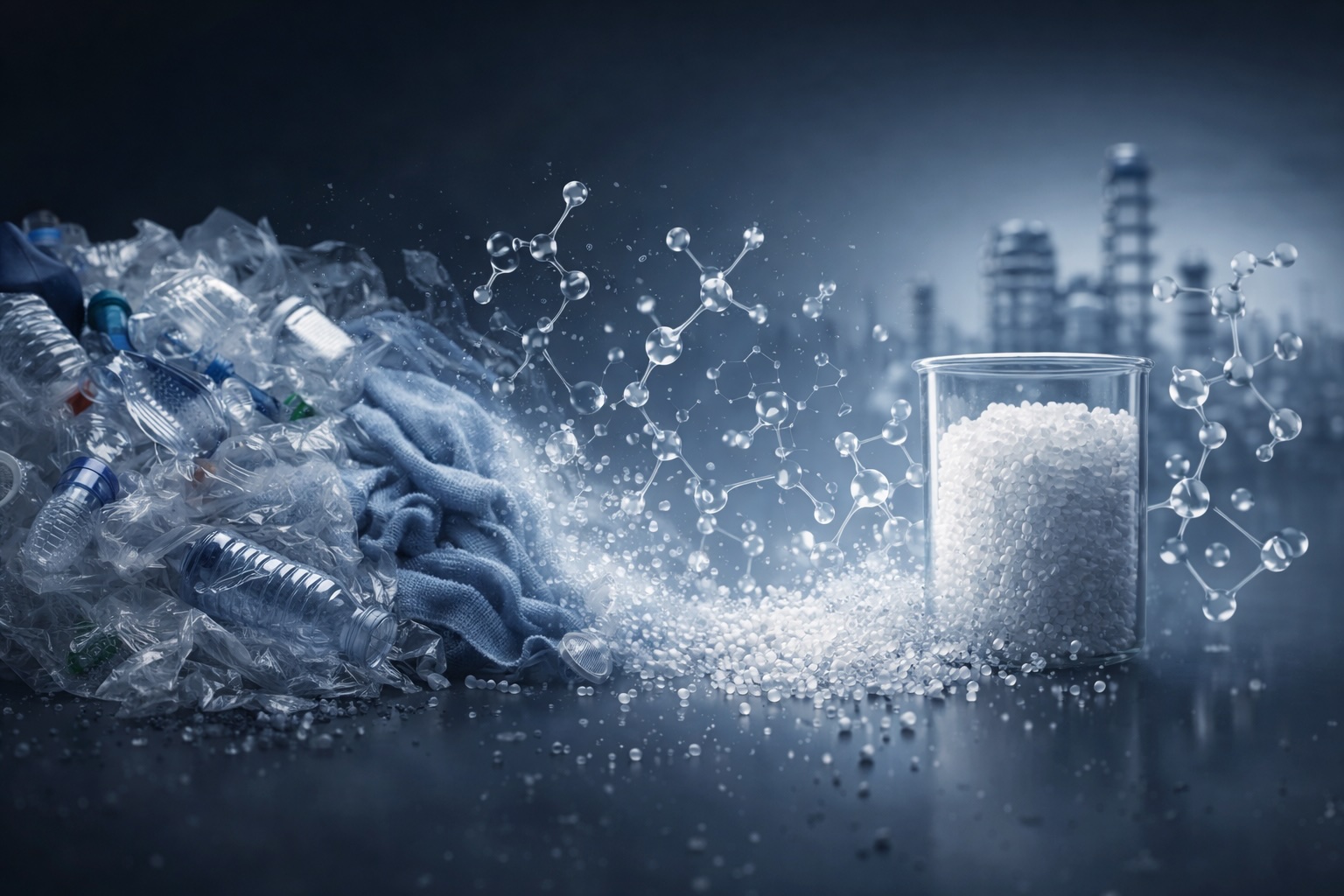
European industry is currently facing a combination of energy, resource and geopolitical uncertainty. Rising oil and natural gas prices are directly reflected in the cost of producing plastics, chemical feedstocks and fertilisers, while dependence on imports from unstable regions remains high. Paradoxically, Europe possesses its own source of carbon for the production of plastics and chemicals, which it largely fails to utilise – plastic waste. The energy crisis of recent years has exposed a structural weakness in the European economy: a lack of domestic carbon sources for the chemical industry. Oil and natural gas are not only energy commodities but…
-
 Read more: Chemical Recycling as a Driver of European Competitiveness
The European plastics value chain is experiencing a deepening industrial crisis that is seriously undermining the European Union’s ability to deliver on its circular economy objectives, climate policy goals and strategic autonomy. A combination of high energy prices, unfair international competition, fragmented regulation and insufficient investment certainty is leading to plant closures, postponed investments and the relocation of production capacities outside the EU. In response to this situation, European and national associations across the entire plastics value chain have put forward a set of strategic measures aimed at stabilising the sector and creating the conditions for its long-term transformation. Alongside…
-
 Read more: Chemical recycling is reshaping Europe’s circular economy
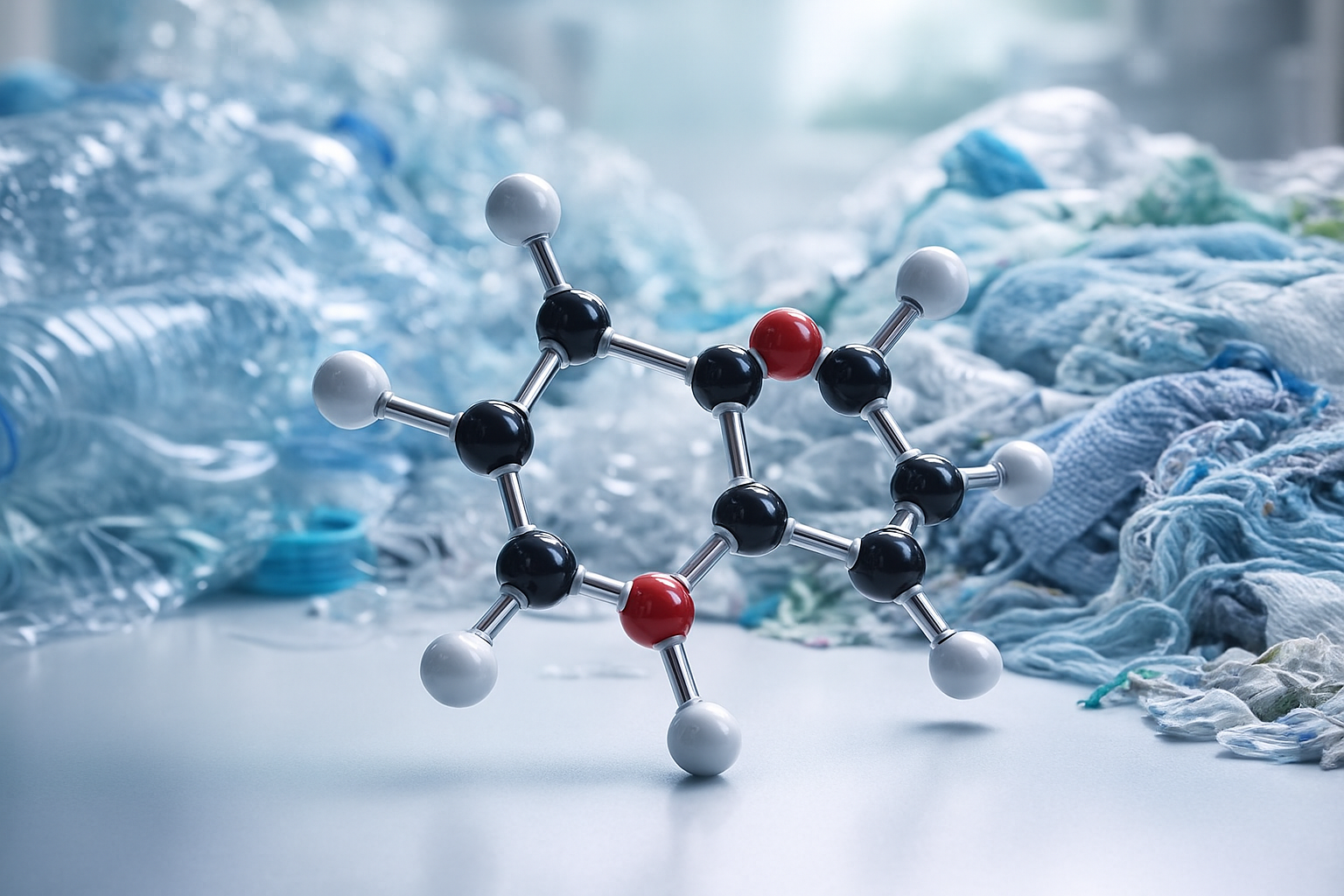
The European Union is facing the most significant transformation in the management of plastics and synthetic materials in the past two decades. Mechanical recycling, long considered the backbone of the circular economy, is hitting both legislative and technological limits. Chemical recycling is therefore entering the stage as a technology capable of returning plastics and synthetic fibres back to the monomer level, delivering materials with a quality equivalent to virgin polymers.New EU legislation makes it increasingly clear that chemical recycling will not be merely a complementary option, but will become a core technology of the EU circular economy. MECHANICAL RECYCLING – STRICT RULES…
-
 Read more: RECIVONE – a clean technology of the zero-waste future
The European Union has entered a new era of recycling. According to the latest Eurostat data, in 2023 the EU generated 79.7 million tonnes of packaging waste, equivalent to 177.8 kg per inhabitant. Although this represents a slight decrease compared to 2022, the total volume of packaging waste remains significantly above the level the EU considers sustainable in the long term. The average recycling rate for plastic packaging reached 42.1%, while the overall recycling rate for all packaging materials was 67.5%. The best performers were Belgium (59.5%), Latvia (59.2%), and Slovakia (54.1%). New targets under PPWR, ESPR and WFD The Packaging…